
Beverly Grove and West Hollywood
Community Goods Photos: Inside the LA Café
Community Goods photos make the room look bigger, calmer and emptier than it usually is. These shots show what the café really looks like: the storefront, the weekend line, the wooden room, the seating, the bodega shelves and the second café inside the Pacific Design Center.
21 photos
Inside and out
2 locations
Edinburgh Ave and PDC
Updated
September 2026
Why Community Goods Is So Photographed
Community Goods is a small café on a residential block off Melrose, and it is one of the most photographed rooms in Los Angeles. There is no mural and no neon sign. It is the light, the wood and a boxed logo that reads clearly from across the street. The café opened in February 2023 and became part of the city’s coffee conversation within months.
Where You Are Going
The street
The Exterior
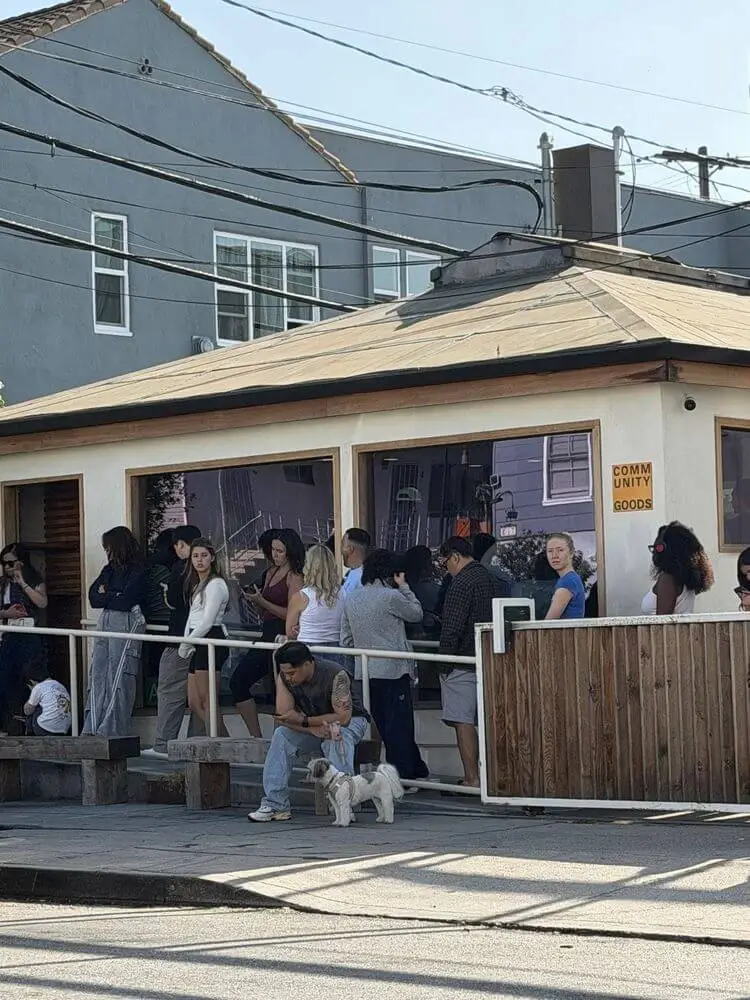
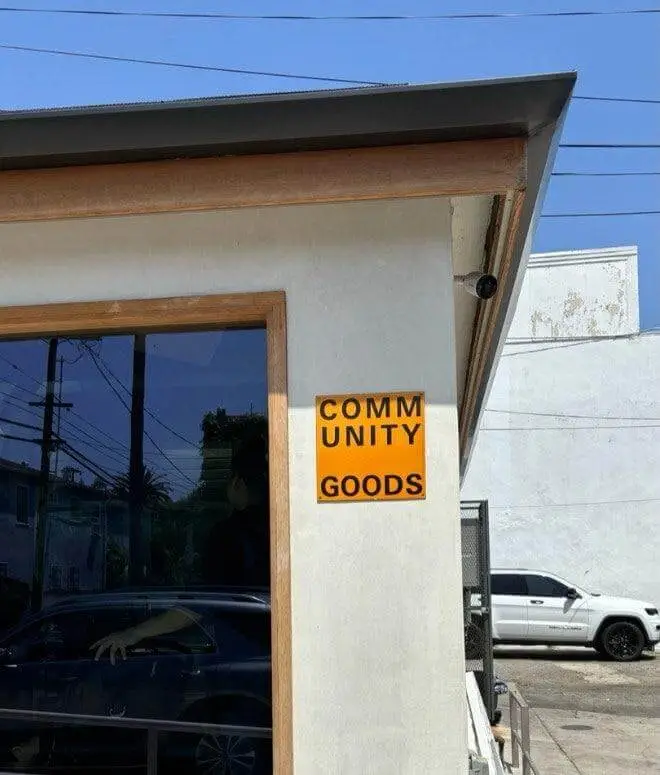
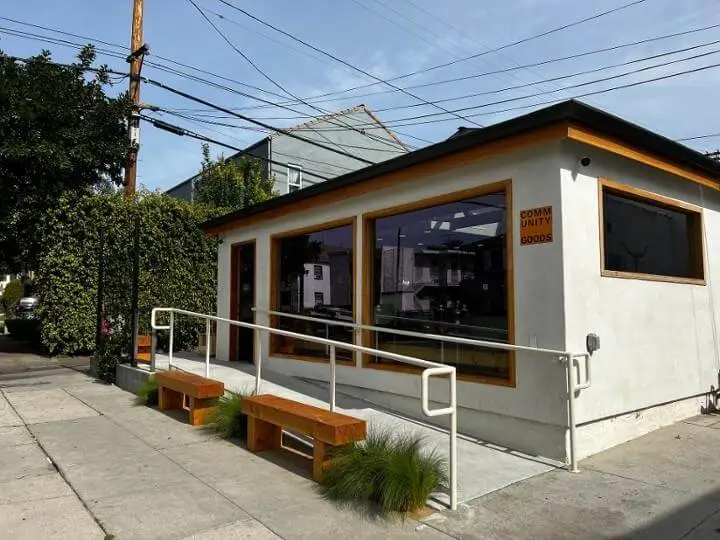
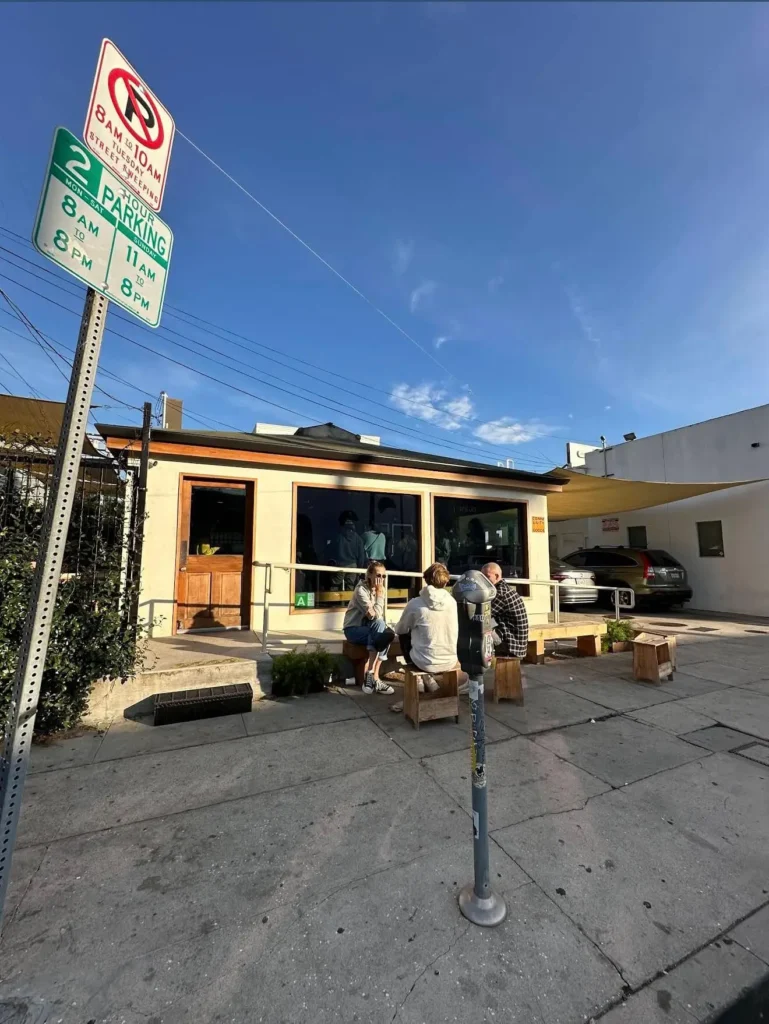
The building gives you almost nothing, which is exactly why it photographs so well. A flat, low facade, glass across the front and the boxed logo, with no other signage competing with it. It sits on a quiet street rather than a commercial strip, so parked cars, front hedges and houses fill the background of most exterior shots. Most Community Goods photos of the storefront are taken from across the street.
The wait
The Line
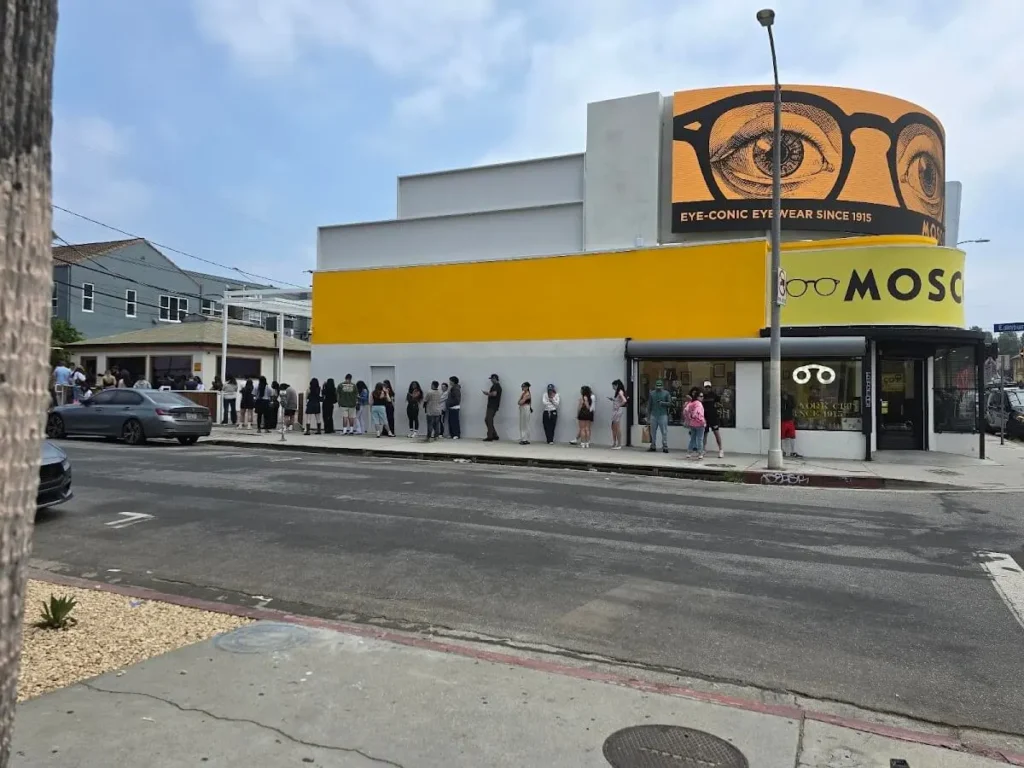
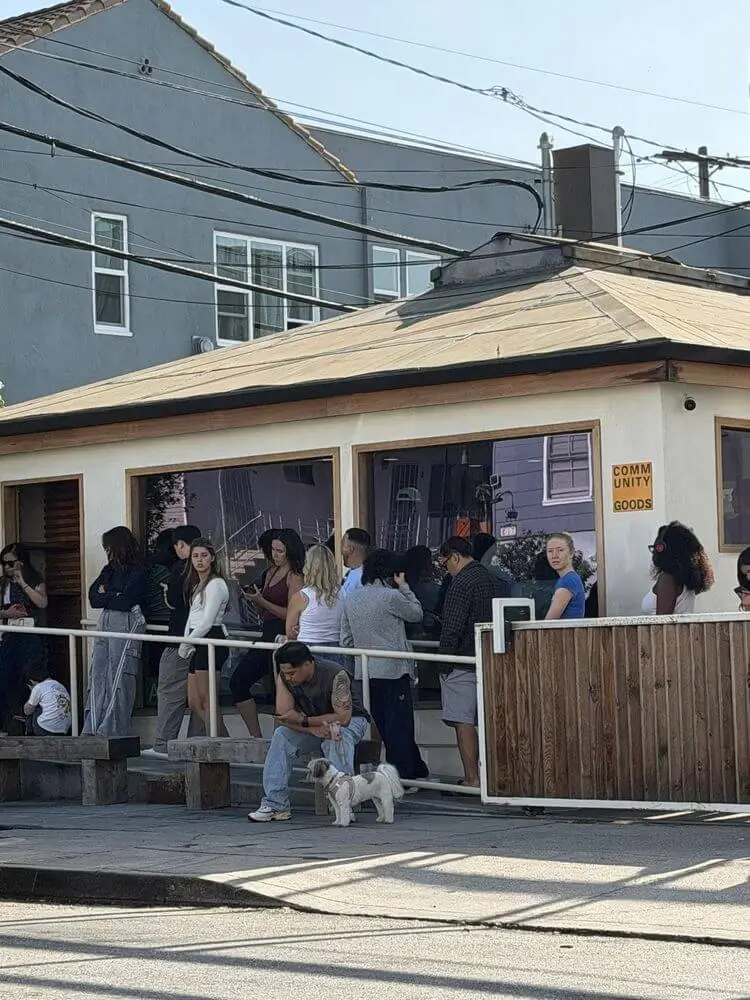
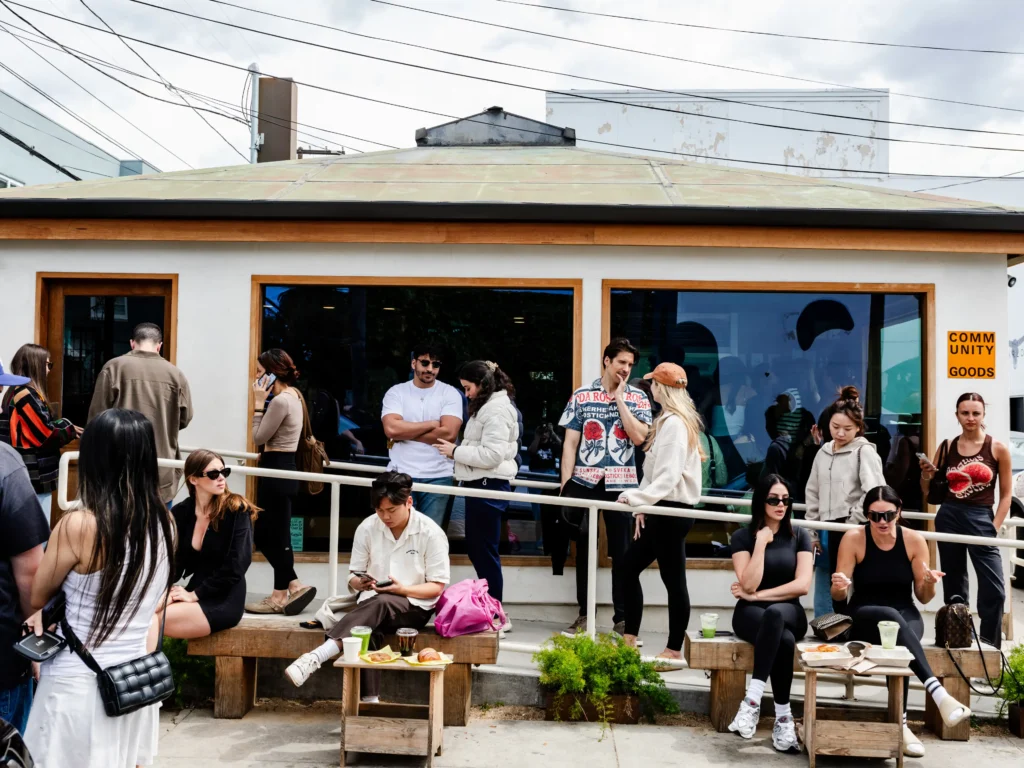
On weekends the line is the first thing you see. It runs along the sidewalk and around the block, and waits can pass an hour on a busy Saturday or Sunday morning. On a weekday morning, none of this applies. Same room, completely different scene, as these two Community Goods photos show.
The room
Inside the Room
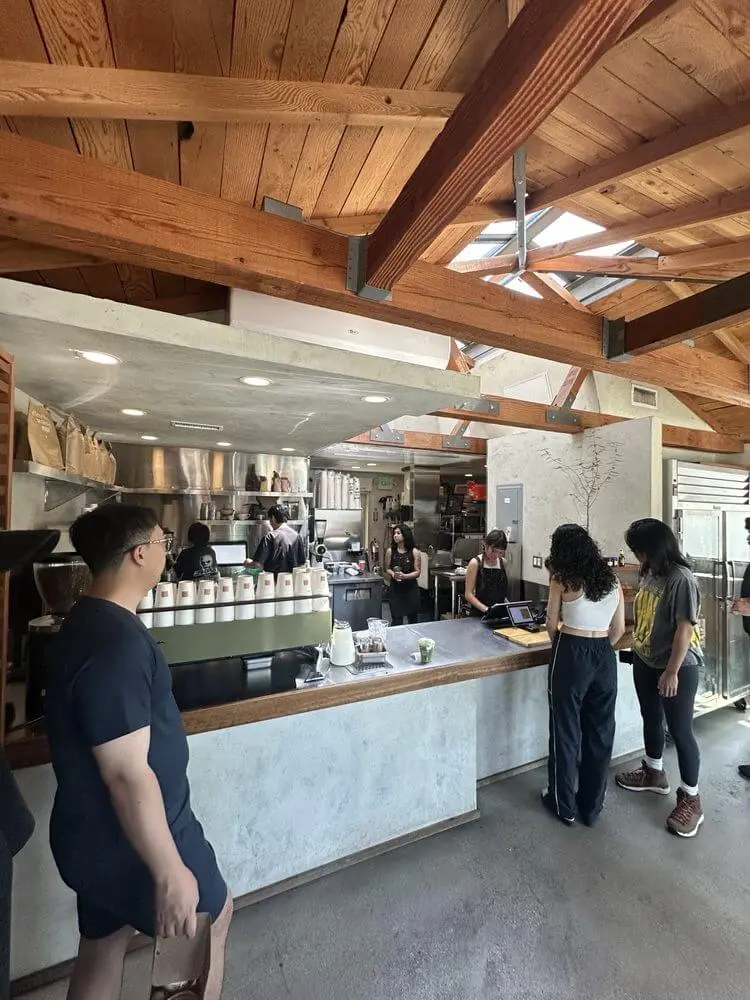
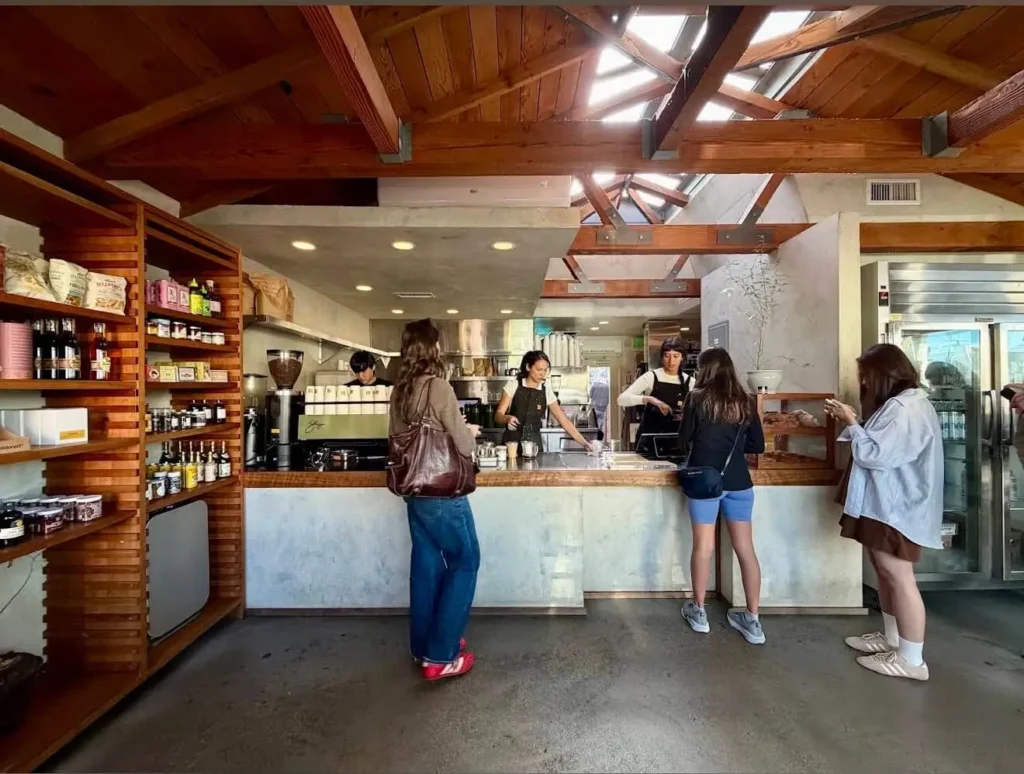
The first thing to know is the scale. The room is smaller than photos suggest, because interior Community Goods photos are almost always taken from the doorway, and that angle stretches the space.
What fills it is material rather than decoration: warm wood on the counter, the shelving and the bench, white walls, and daylight coming through the front glass and carrying most of the way back. The style is often described as Japandi, a blend of Japanese restraint and Scandinavian warmth. There is no feature wall and no photo corner. The room looks best when it is not full of people.
Where you sit
Seating
Seating is the most misread thing about this café. Community Goods photos suggest a good place to work, but the reality is a long wooden bench, a handful of small stools, and a couple of benches and small tables outside. At peak hours most people order, wait and stand, and many take their order to the sidewalk. If you want a laptop afternoon, the Pacific Design Center café is the better bet.
The bodega side
The Shelves
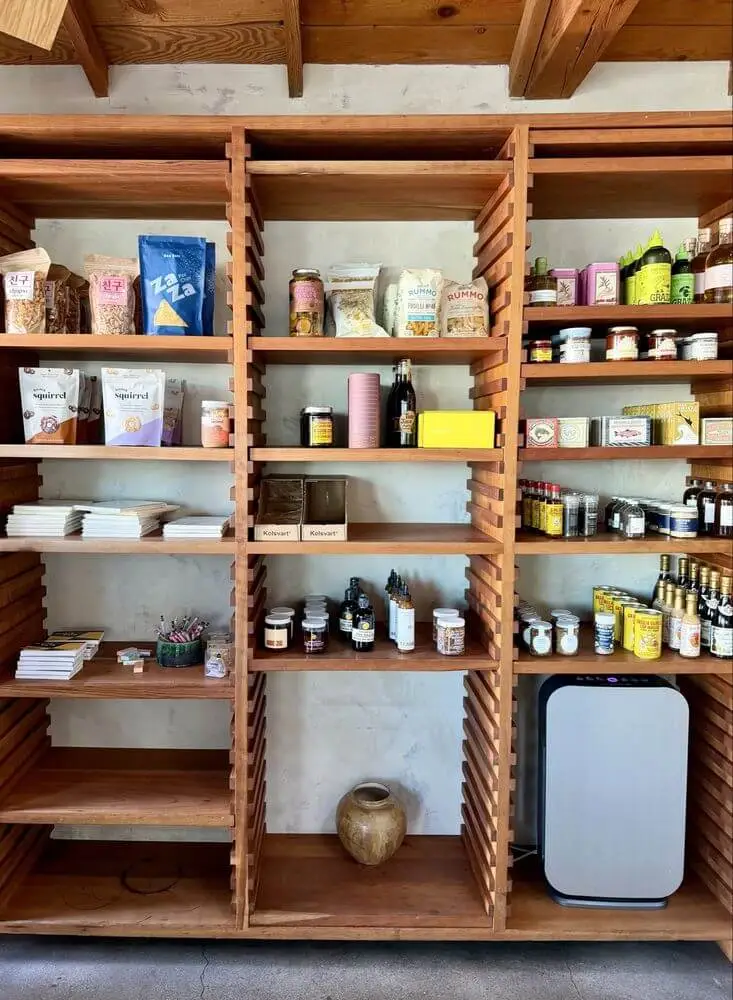
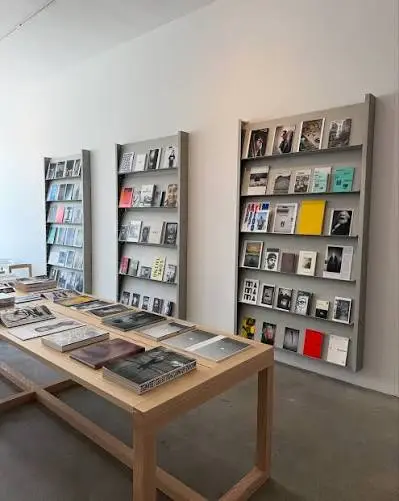
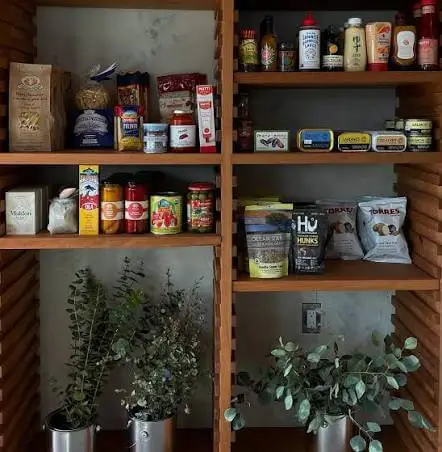
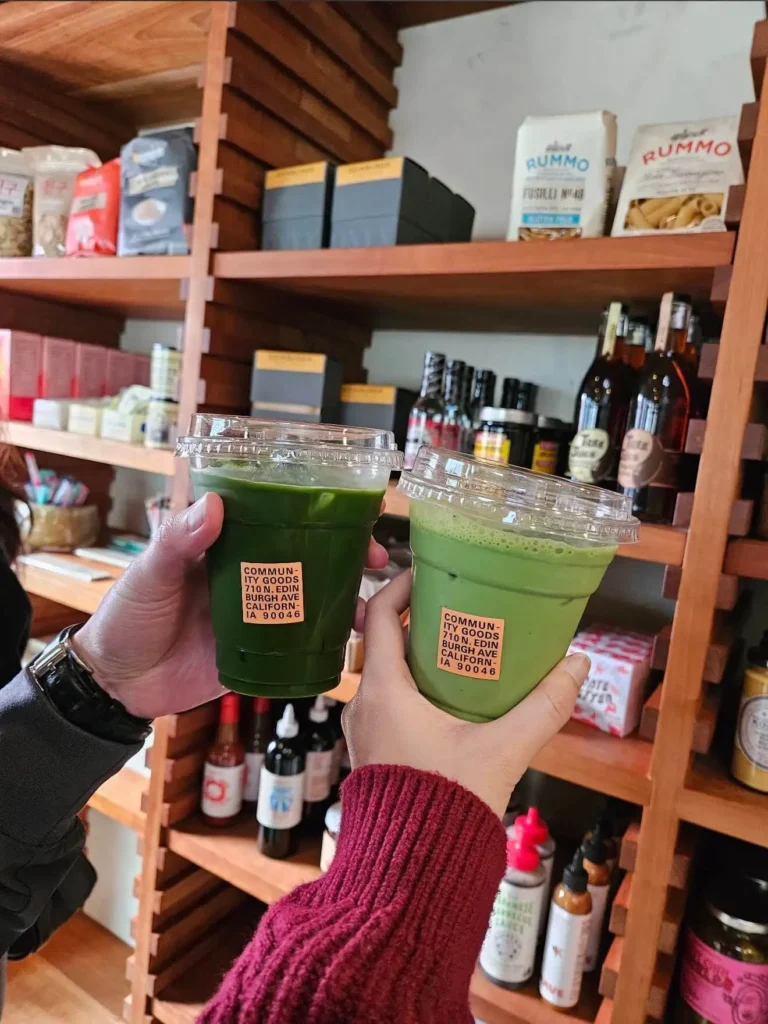
Community Goods is a café and bodega, and the shelving is where that second half shows up. Pantry goods, books and records sit on handmade wooden shelves next to the coffee bar, adding objects, labels and color at eye level.
The coffee bar
Behind the Counter
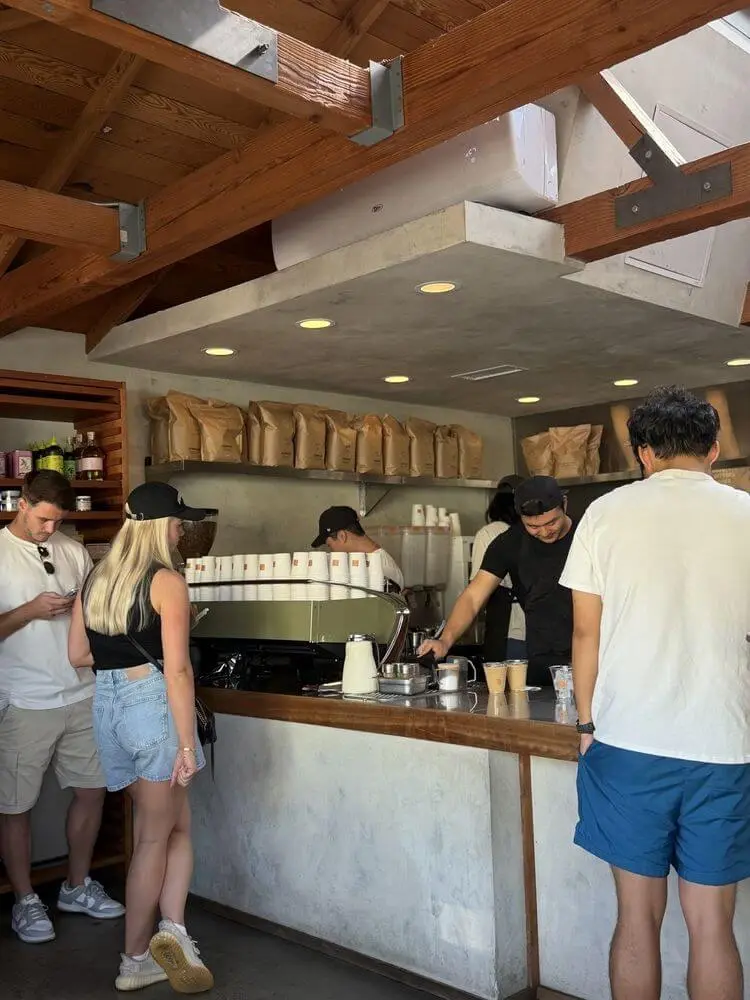
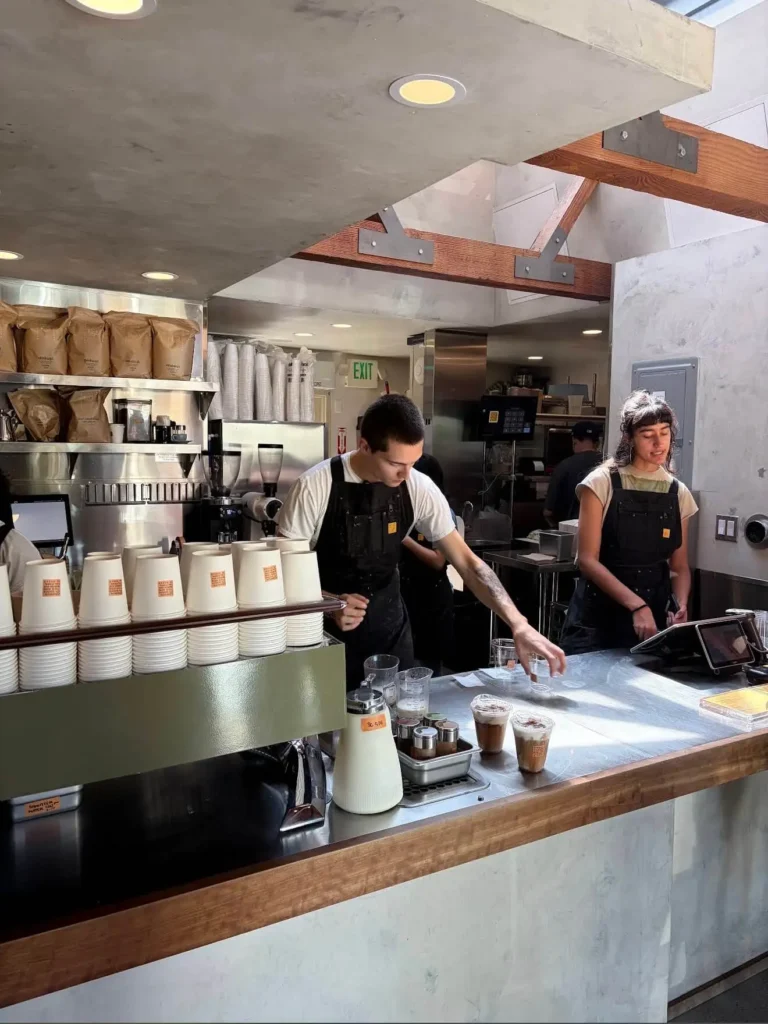
The espresso setup is open and a few feet from where you order, so the counter is the busiest part of the room: baristas pulling shots, whisking matcha and calling names. When the room fills, the quiet space turns loud and tight. Which version you get depends on when you walk in.
What ends up on camera
What People Photograph on the Bench
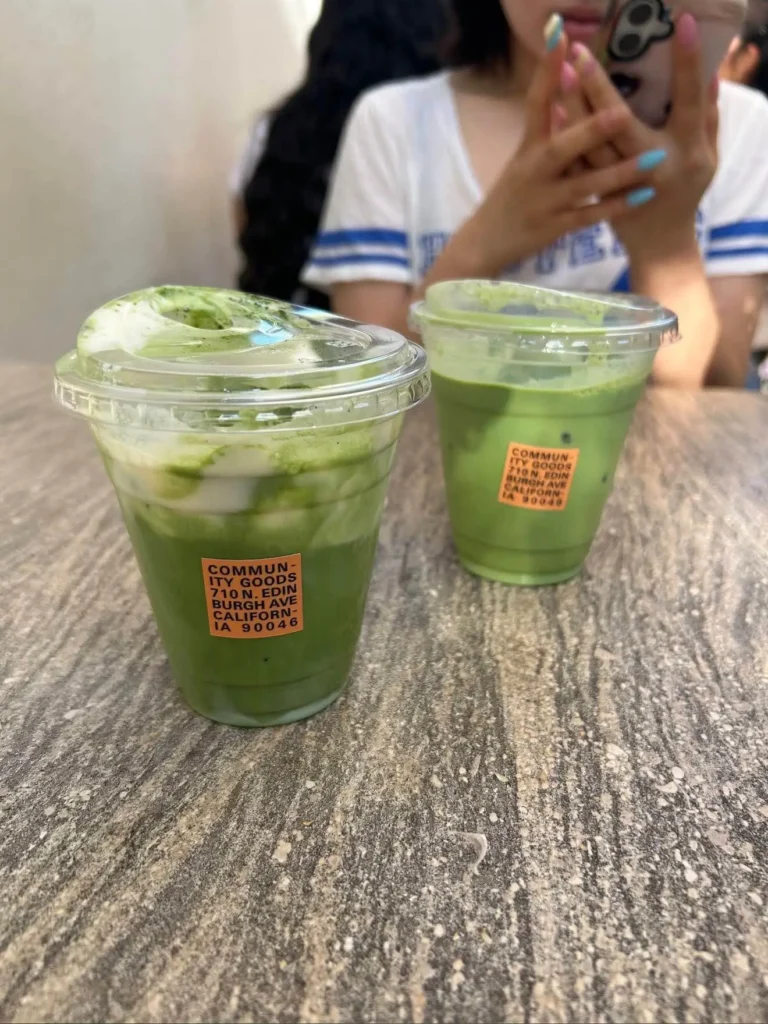
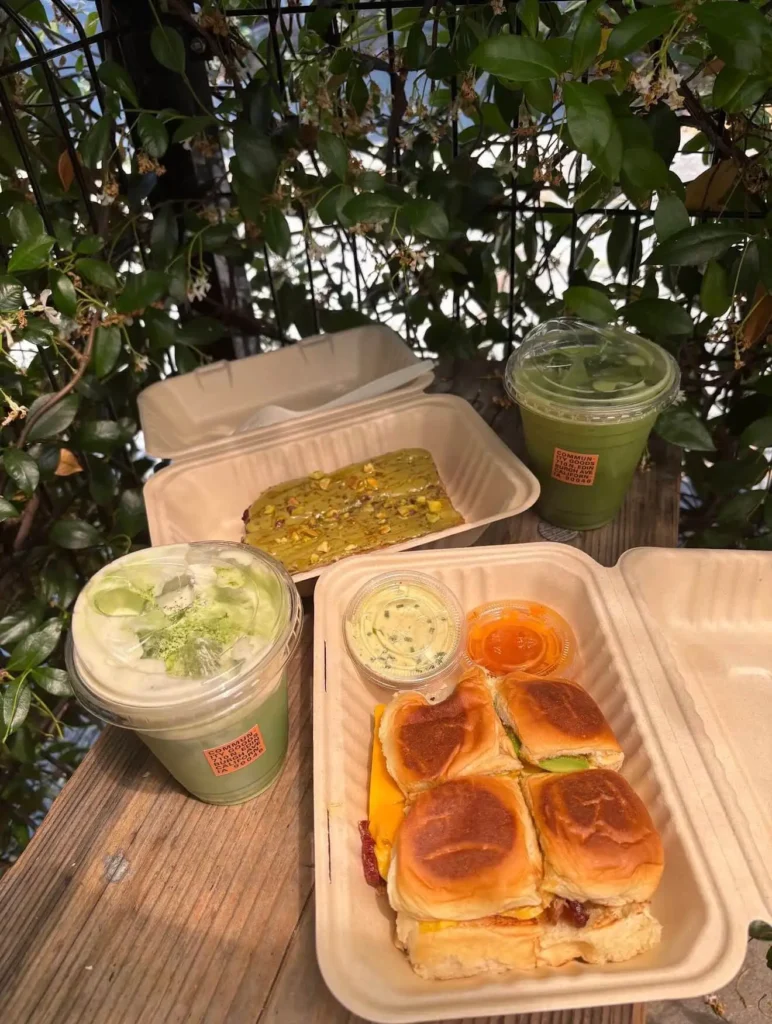
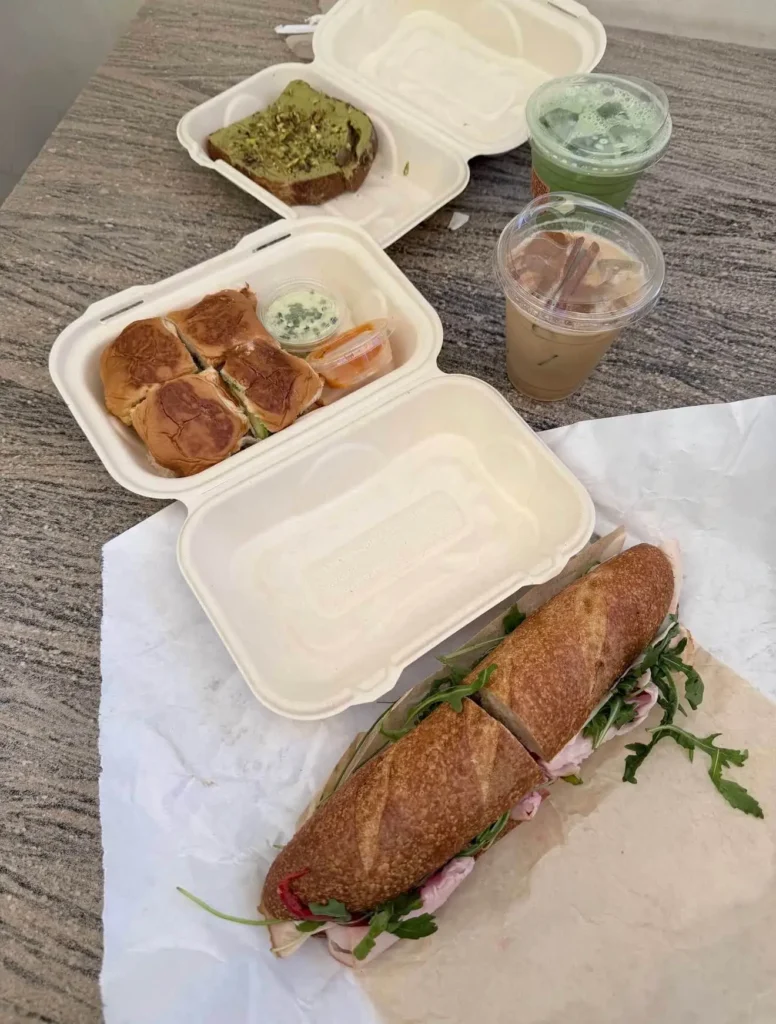
Most Community Goods photos are not of the room at all. They are of an order set down on the outdoor bench in hard California sun. The layered iced drinks do most of the work, because the espresso and sweetened cream separate clearly in a clear cup. Green matcha next to dark coffee is the other constant. On the food side, the breakfast sliders on Hawaiian rolls and the thick pistachio toast show up most. See what they cost on the full Community Goods menu.
The second location
The Pacific Design Center Café
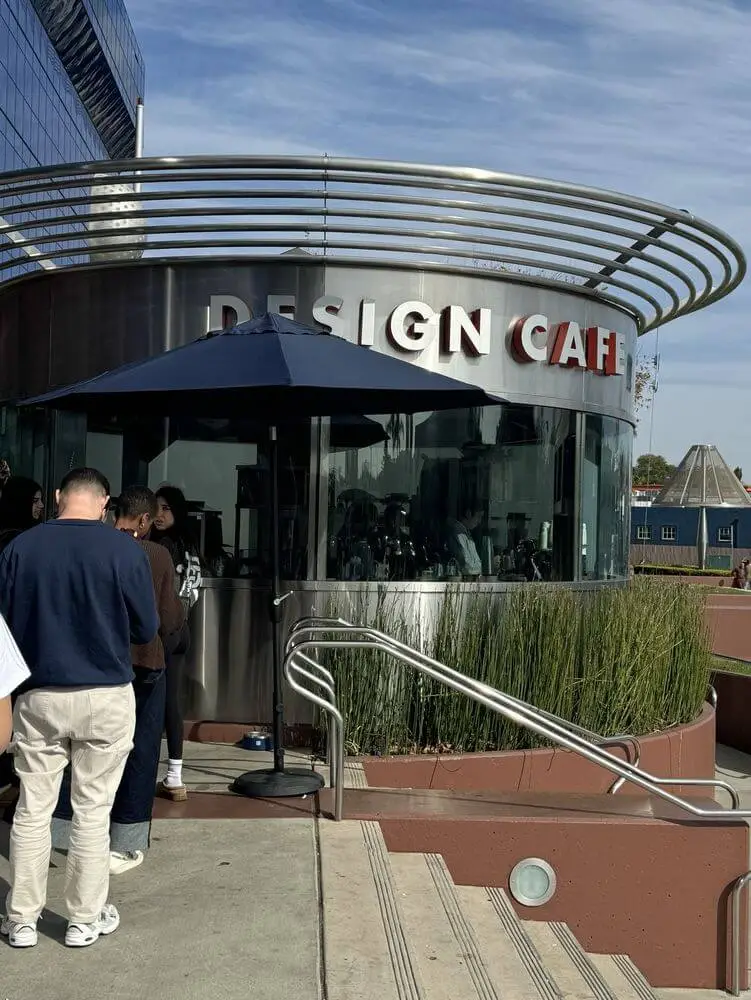
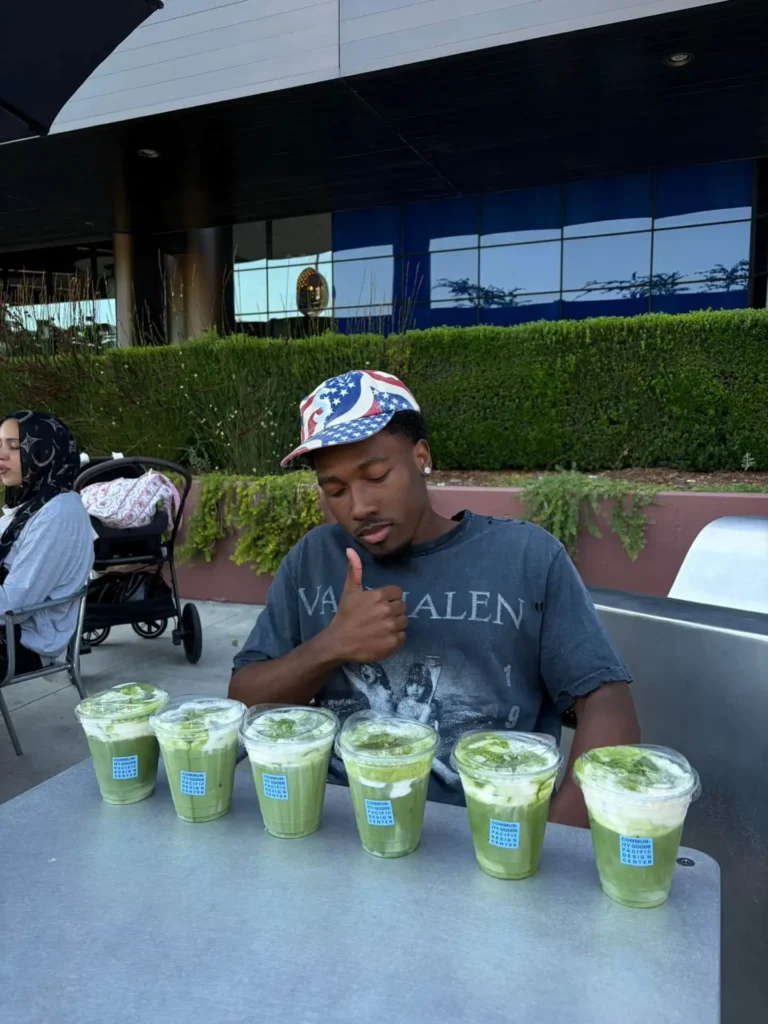
The Melrose café sits inside the Pacific Design Center, César Pelli’s 1975 complex that Los Angeles calls the Blue Whale for its blue glass. That backdrop makes Community Goods photos from this café look completely different: glass, scale and hard geometry instead of a residential street and a hedge.
It is also calmer, with more room to stand, shaded outdoor seating and a much shorter wait than Edinburgh Ave. If you want the wooden room, only Edinburgh will do. If you want space, shade and architecture in the frame, this is the better visit.

Timing
When the Room Looks Like the Photos
Timing matters more for Community Goods photos than at almost any other LA café, because the crowd changes and the room does not.
Opening Hours
Edinburgh Ave
Mon to Fri 7am to 4pm
Sat and Sun 8am to 5pm
Pacific Design Center
Mon to Fri 7am to 6pm
Sat and Sun 8am to 6pm
Breakfast ends at 12pm on weekdays and 1pm on weekends. See the breakfast menu for details.
Community Goods Photos FAQs
What does Community Goods look like inside?
It is a small, Japandi-style room with a warm wooden counter, handmade shelving, a long wooden bench, white walls and plenty of daylight from the front glass.
Where is the best spot for Community Goods photos?
The outdoor bench out front is the favorite spot for drink photos, and the storefront looks best from across the street.
Is Community Goods good for working on a laptop?
Not the Edinburgh Ave café, which has limited seating. The Pacific Design Center café has more room and shaded outdoor seating.
Is there seating at Community Goods?
Edinburgh Ave has a long wooden bench, a few stools and a couple of outdoor benches and small tables. Most people stand or take their order outside at peak hours.
What does the Pacific Design Center café look like?
It sits inside the blue glass Pacific Design Center on Melrose Ave, with more space, shaded outdoor seating and a modern, architectural feel.
When is the best time to take photos at Community Goods?
Weekday mornings, when the room is quiet and full of light. Overcast days give softer light than bright afternoons.
Is there parking at Community Goods?
Edinburgh Ave is a residential street with street parking only. Read the signs and expect to walk a block.
Why is Community Goods so photogenic?
Clean light, warm wood, a boxed logo and clear cups that show off layered drinks make almost every angle work on camera.
Seen the Room? Now Pick Your Order
So, a weekday morning at the Edinburgh Ave café is the best time to see Community Goods the way it looks in photos. Once you know the space, the next question is what to order.